Contractors should evaluate a commercial LED flood light on seven factors: luminous efficacy, ingress protection, thermal and housing design, surge and lightning protection, mounting flexibility, color temperature and beam control, and certifications plus supplier capability. Skipping any one of these turns a “cheap” bid into call-backs, premature failures, and warranty disputes. This guide gives the […]
Contractors should evaluate a commercial LED flood light on seven factors: luminous efficacy, ingress protection, thermal and housing design, surge and lightning protection, mounting flexibility, color temperature and beam control, and certifications plus supplier capability. Skipping any one of these turns a “cheap” bid into call-backs, premature failures, and warranty disputes. This guide gives the contractor a field-ready checklist backed by verified specs.

Factor 1: Luminous Efficacy (Lumens per Watt)
Efficacy – lumens per watt (lm/W) – decides how much light you get for the energy bill. LED flood lights already outperform halogen and HID dramatically. RRR Lighting positions its reflector-based flood lights as a 500W halogen replacement that saves over 80% on electricity, thanks to high-efficiency SMD chips and a radial reflector surface. For a contractor, higher efficacy means fewer fixtures to hit target lux and lower operating cost for the client.
Factor 2: Ingress Protection (IP65 or Better)
Commercial sites expose fixtures to rain, dust, and wash-down. RRR Lighting’s guidance is that IP65 – dust-tight plus resistance to rainfall and low-pressure jets – is the right balance for typical outdoor LEDs, with IP66/IP68 reserved for near-water or heavy wash-down zones. Specify IP65 as the floor for any commercial flood light.
See RRR Lighting’s IP rating guide for the full digit-by-digit breakdown.
Factor 3: Thermal Design and Housing
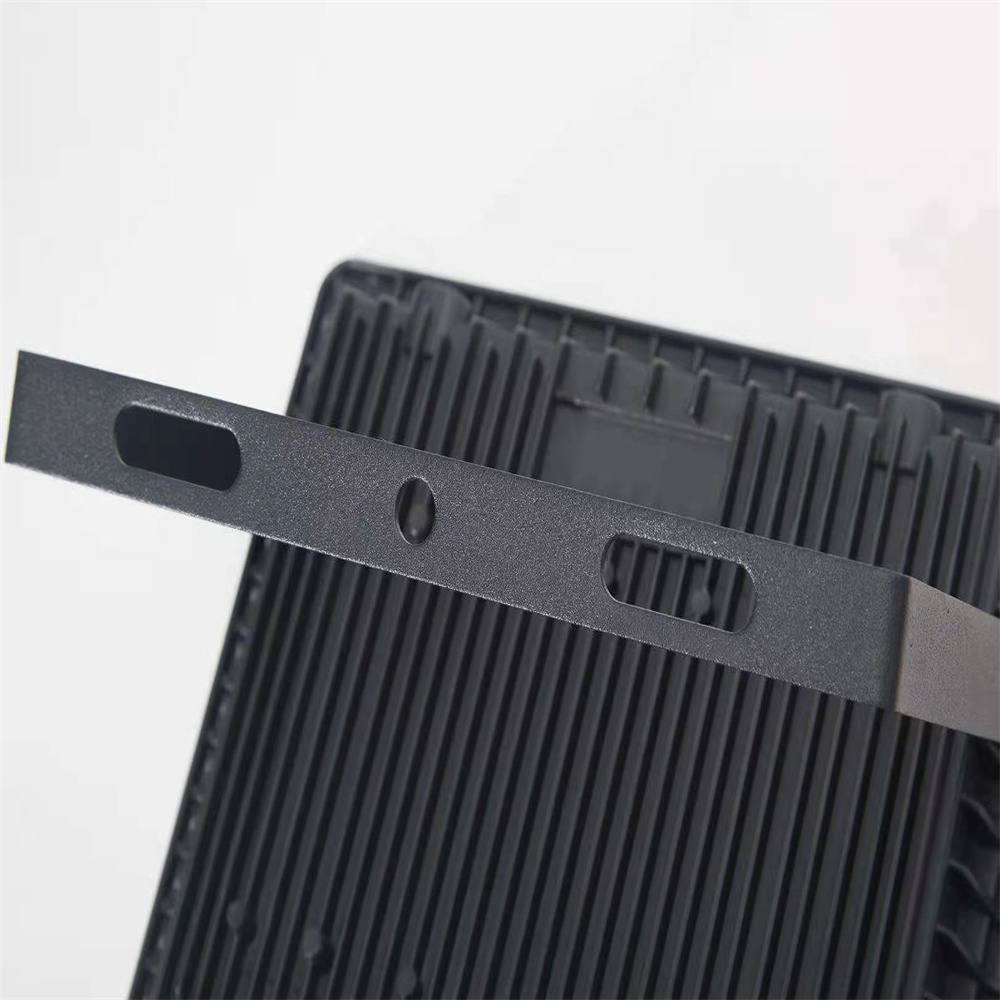
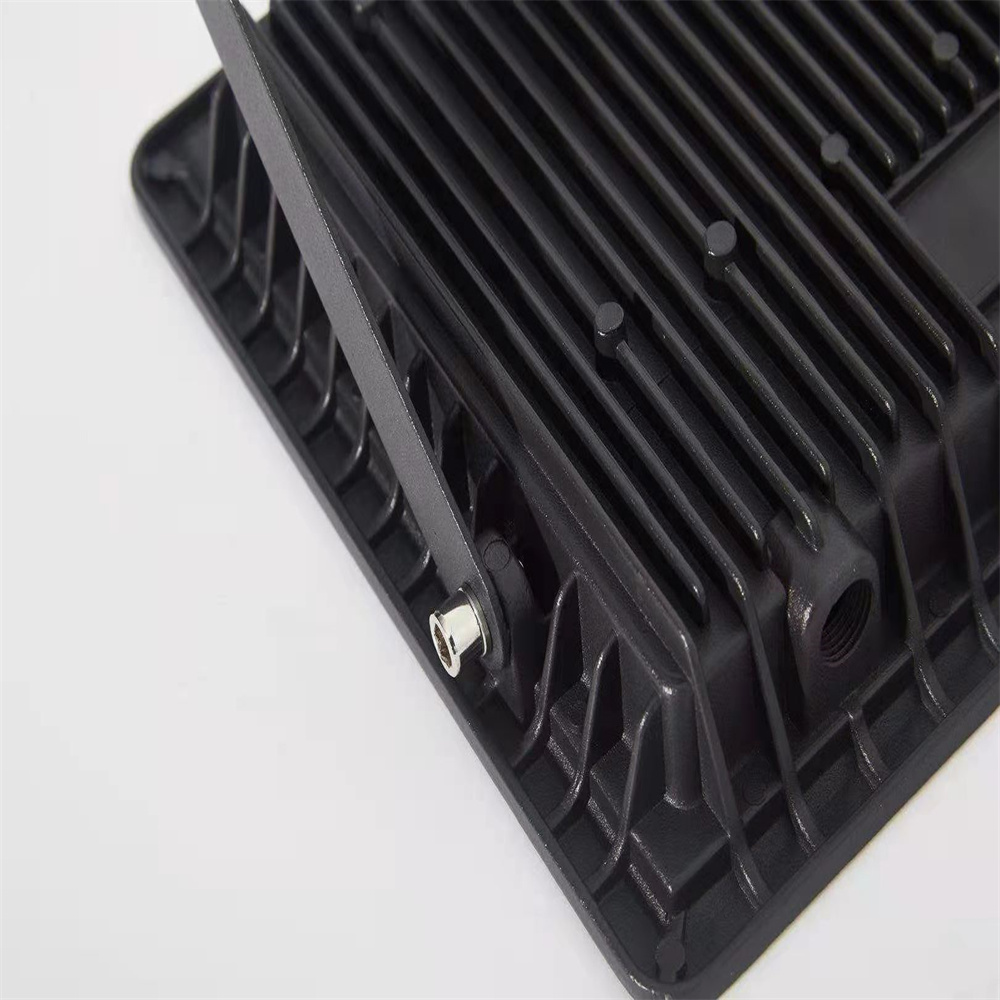
Heat is the enemy of LED lifespan. Look for a heavy-duty die-cast aluminum housing with tempered (heat-resistant) lenses, finned heat sinks, and a waterproof breathable membrane that equalizes internal pressure and cuts condensation. RRR Lighting credits this design with pushing LED life to 50,000–100,000 hours (about 13+ years at 10 hours/day). The breathable membrane is the practical “breathing valve” contractors should look for to avoid fogged lenses and seal failure.
Background: what type of material is best for outdoor lighting.
Factor 4: Surge and Lightning Protection
Commercial and outdoor fixtures sit on long circuits and exposed structures, making them vulnerable to grid surges and lightning. Treat integrated surge suppression as a required line item and request the manufacturer’s stated protection rating (in kV) rather than assuming it. This is a spec to confirm in writing during procurement – it is not something to infer from the housing alone.
Factor 5: Mounting Bracket and Adjustability
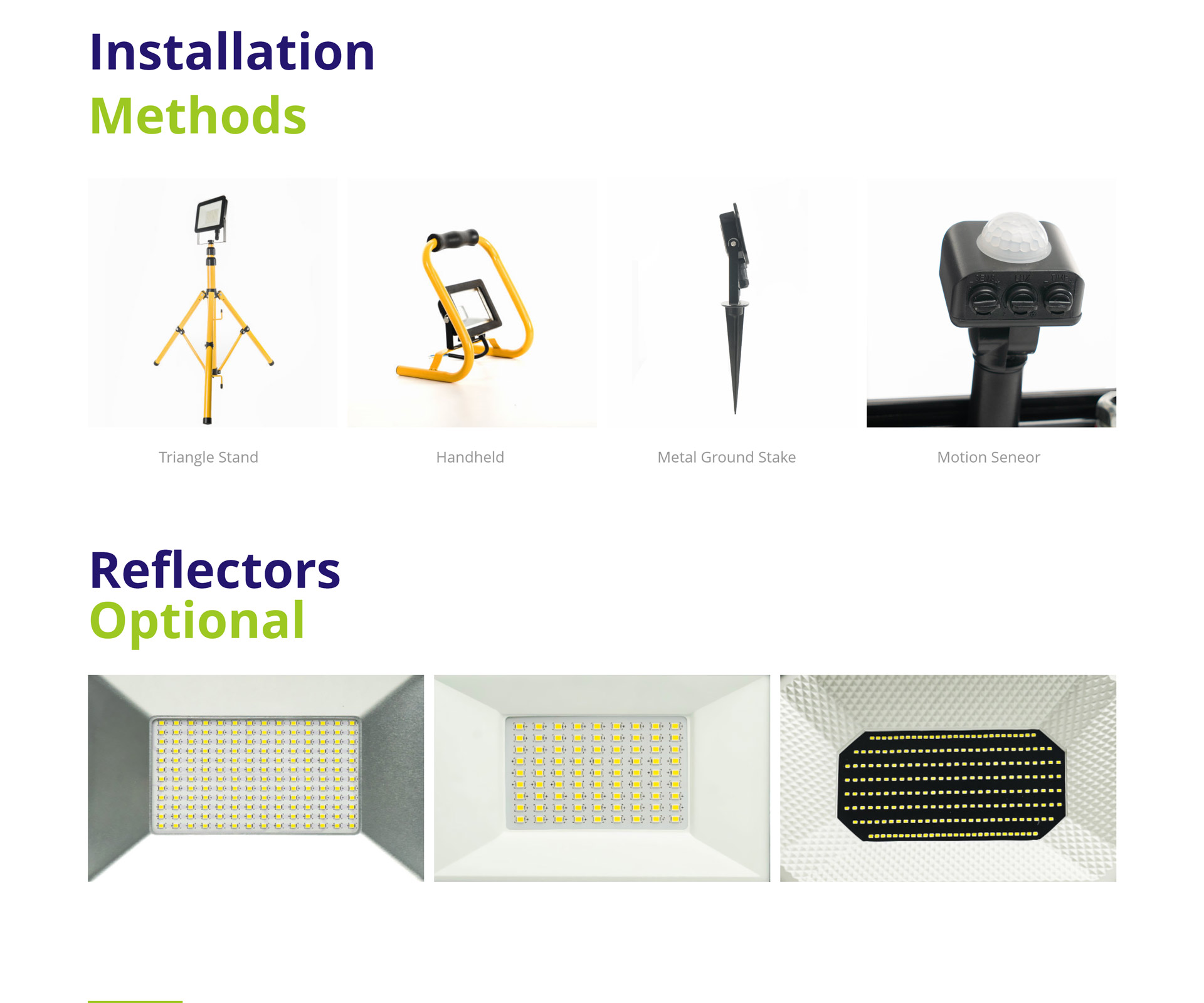
Contractors need fixtures that aim where the plan calls for. RRR Lighting’s industrial flood-light description emphasizes “adjustable mounting options,” and its range supports wall, pole, triangle-stand, and ground-stake installation. Confirm the bracket material, rotation range, and whether the aim holds under wind load before you schedule the lift.
Factor 6: Color Temperature and Beam Control
Pick CCT by function:
- 4500–5000K (cool) – security, parking, and facades where camera detail matters.
- 3600–4100K (neutral) – maintenance and yard work areas.
- 2700–3000K (warm) – hospitality and landscape accents.
RRR Lighting states it offers floods across the complete Kelvin range, and the W78 series is engineered to “precisely control the light” – useful when you must avoid overspill onto neighboring property. Details in RRR Lighting’s color temperature guide.
Factor 7: Certifications and Supplier Capability
For commercial deployment, compliance and support matter as much as the hardware. RRR Lighting lists CE, RoHS, FCC, and EMC certifications, in-house testing and inspection, and ODM/OEM manufacturing capability – so finishes and specs can be tailored to a project. A supplier with in-house test equipment is more likely to stand behind its lumen and lifespan claims.
The Contractor’s 7-Point Checklist
| # | Factor | Minimum to specify |
|---|---|---|
| 1 | Efficacy | High lm/W; verify vs halogen-equivalent claim |
| 2 | IP rating | IP65 (IP66 for wet zones) |
| 3 | Thermal / housing | Die-cast aluminum, finned sink, breathable membrane |
| 4 | Surge protection | Stated kV rating from manufacturer |
| 5 | Mounting | Adjustable bracket, verified aim retention |
| 6 | CCT / beam | Cool for security; precise optic to limit overspill |
| 7 | Certs / supplier | CE/RoHS/FCC/EMC; in-house test; ODM/OEM |
Which RRR Lighting Fixtures Fit Commercial Jobs?
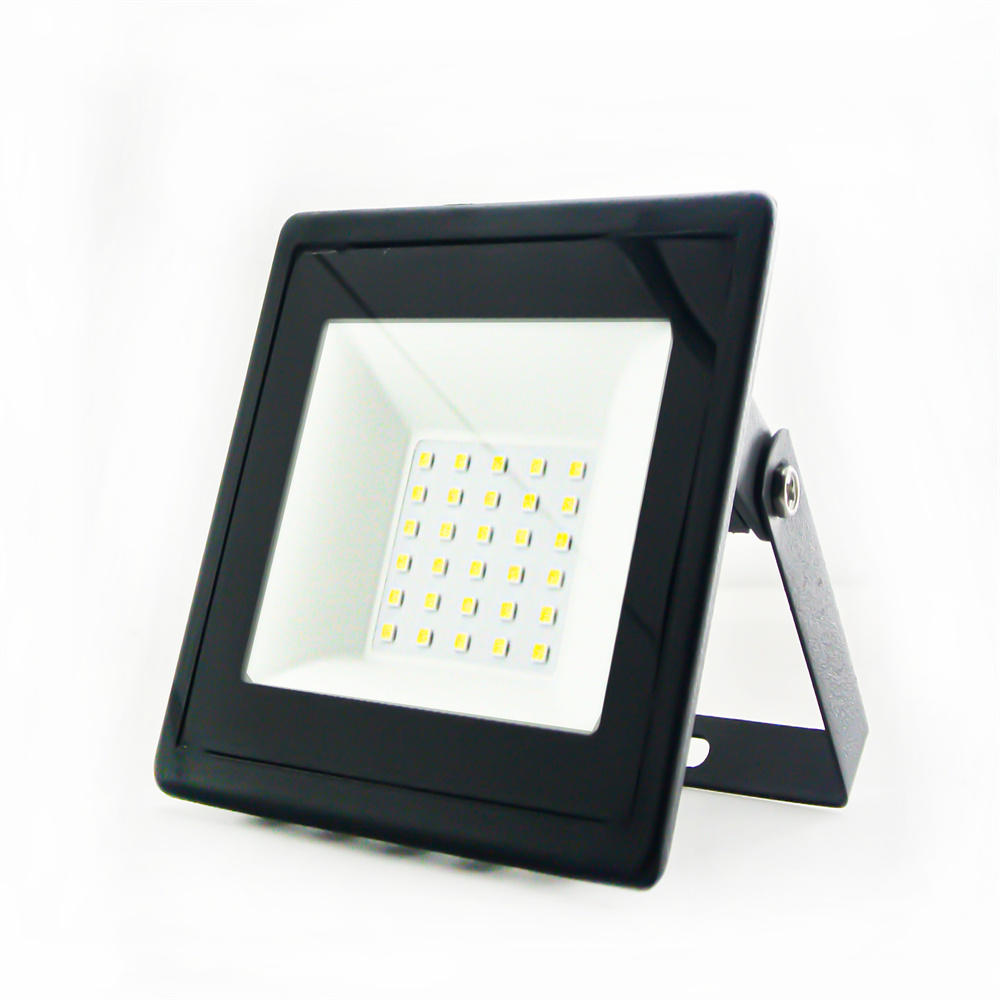
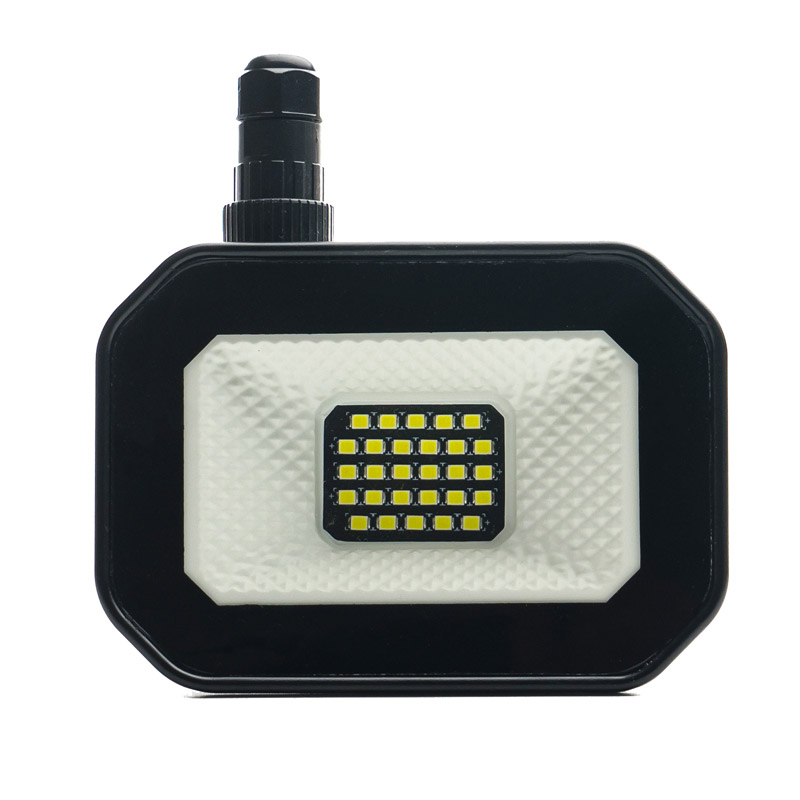
- WL85 commercial LED flood lights – corrosion-resistant finishes (aluminum, stainless-look, weather-resistant coatings), customizable.
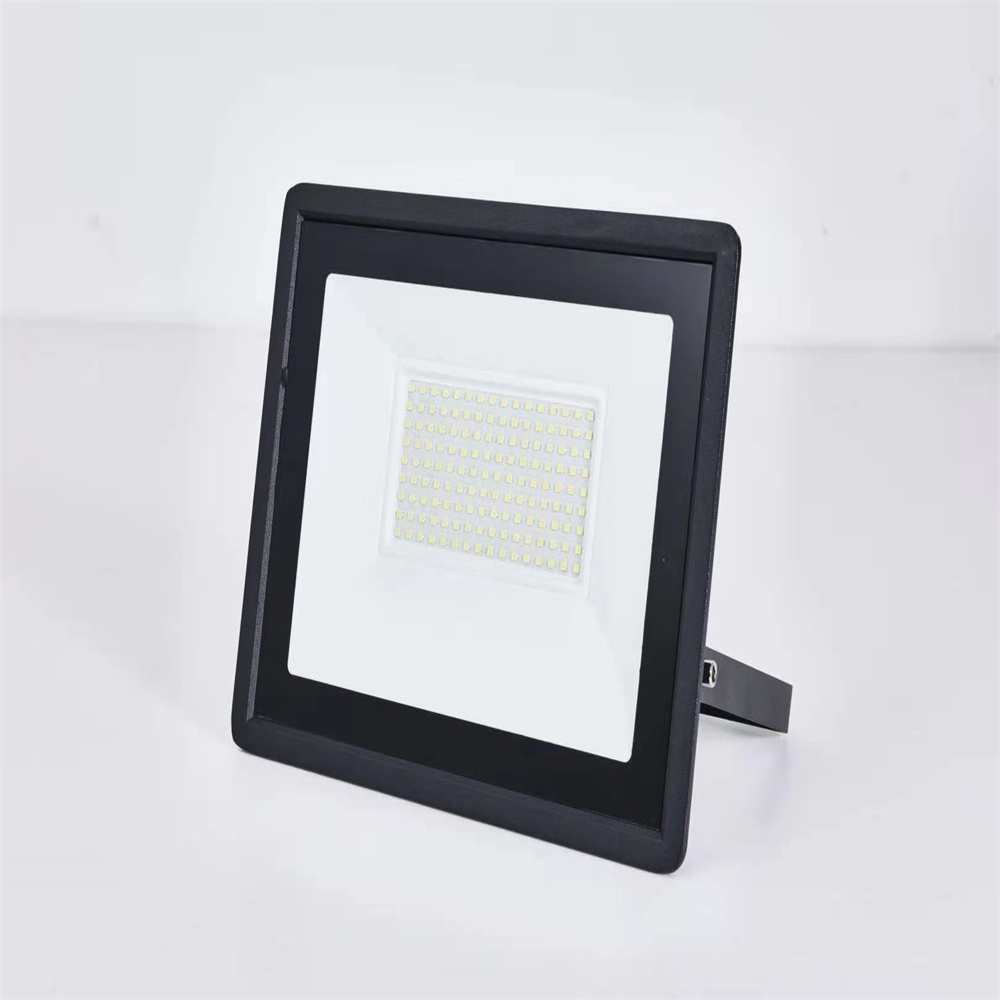
- WL78 series outdoor LED floodlight – ultra-thin, anodized-aluminum reflector, precise light control.
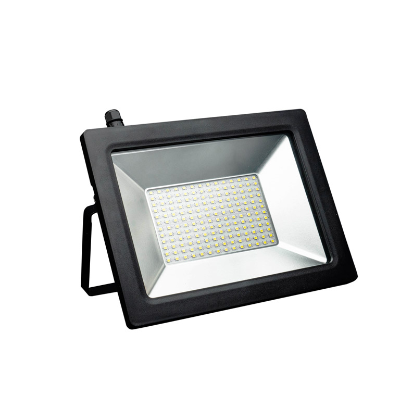
- WL71 100W–200W LED flood light – workhorse for lots and perimeters.
Browse all options on the LED flood lights category page. For project planning, also see choosing commercial outdoor LED flood lights y a guide to commercial exterior lighting.
Frequently Asked Questions
What efficacy should a commercial flood light deliver?
Specify high lumens-per-watt LEDs; RRR Lighting’s reflector design is marketed as a 500W halogen replacement saving over 80% on energy, which is the kind of step-change contractors should expect from modern LED engines.
Is IP65 enough for commercial outdoor flood lights?
Yes – IP65 (dust-tight, jet-water resistant) is the right floor for commercial outdoor use. Move to IP66 only for wash-down or near-water installations.
What is the “breathing valve” I keep seeing mentioned?
It refers to a waterproof breathable membrane in the housing that equalizes pressure and reduces condensation, helping prevent fogged lenses and seal failure over time.
Do I really need surge protection on outdoor fixtures?
Yes. Outdoor and commercial fixtures are exposed to grid surges and lightning. Request the manufacturer’s stated surge-protection rating (in kV) and put it in the spec.
What certifications prove a flood light is job-ready?
CE, RoHS, FCC, and EMC are the marks RRR Lighting lists, backed by in-house testing and ODM/OEM capability – the baseline for commercial deployment.
How long do these commercial flood lights last?
RRR Lighting states 50,000–100,000 hours of operation for its LED flood lights, supported by die-cast aluminum heat dissipation.